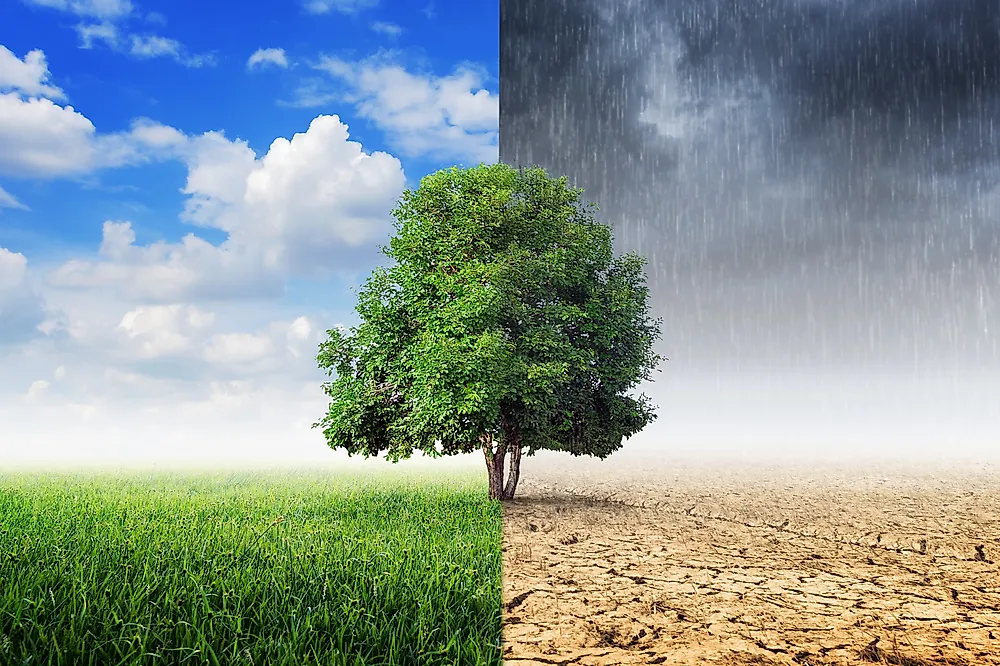
Understanding what is the difference between weather and climate is essential for everyone because these two terms are often used interchangeably, even though they have distinct meanings. Weather refers to the short-term atmospheric conditions at a specific place and time, while climate describes the average weather patterns of a region over many years. Knowing this distinction helps people better understand weather forecasts, climate change, agriculture, travel planning, and environmental issues. From deciding whether to carry an umbrella today to understanding why deserts remain dry and tropical regions stay warm, both weather and climate play important roles in our daily lives. This guide explains their meanings, characteristics, differences, influencing factors, and importance in simple language so that anyone can easily understand the concept.
Understanding Weather
Weather refers to the day-to-day condition of the atmosphere at a particular place and time. It changes frequently and may vary from hour to hour or day to day. Weather includes factors such as temperature, humidity, rainfall, wind speed, cloud cover, atmospheric pressure, and visibility. For example, a sunny morning can quickly turn into a rainy afternoon because weather is highly dynamic.
Meteorologists use satellites, weather stations, radars, and computer models to predict weather conditions. Weather forecasts help people prepare for outdoor activities, farming, transportation, and emergency situations. Since weather is influenced by rapidly changing atmospheric conditions, forecasts become less accurate over longer periods.
Examples of weather include:
- Sunny and warm today
- Heavy rainfall tomorrow
- Strong winds during the evening
- Snowfall over the weekend
- Thunderstorms expected this afternoon
These examples describe temporary atmospheric conditions rather than long-term patterns.
Understanding Climate
Climate refers to the long-term average pattern of weather in a particular region, usually measured over at least 30 years. Instead of describing today’s conditions, climate explains what kind of weather a place normally experiences throughout the year.
Climate includes average temperature, annual rainfall, seasonal changes, humidity, and wind patterns observed over decades. Regions such as deserts, rainforests, mountains, and polar areas each have unique climates due to their geographical characteristics.
When asking what is the difference between weather and climate, it is helpful to remember that climate represents the “expected” weather over many years rather than today’s actual conditions.
For example:
- The Sahara Desert has a hot and dry climate.
- Antarctica has an extremely cold climate.
- Tropical regions experience warm temperatures throughout the year.
- Mediterranean regions have dry summers and mild winters.
Climate remains relatively stable over decades, although it can gradually change due to natural processes and human activities.
What Is the Difference Between Weather and Climate?
The simplest way to understand what is the difference between weather and climate is to think about time.
Weather tells you what is happening in the atmosphere today or this week, while climate tells you what usually happens over many years.
For example, one unusually cold day does not change the climate of a tropical city. Similarly, one rainy week does not mean a desert has become a rainforest. Climate is based on long-term averages rather than individual events.
People often confuse these two concepts because both involve atmospheric conditions. However, their main distinction lies in the duration over which observations are made.
Weather vs Climate Comparison Table
| Feature | Weather | Climate |
|---|---|---|
| Definition | Short-term atmospheric conditions | Long-term average weather patterns |
| Time Period | Minutes to weeks | 30 years or more |
| Changes | Frequent and rapid | Slow and gradual |
| Forecast | Days or weeks | Decades and long-term trends |
| Observation | Daily measurements | Long-term records |
| Example | Rain today | Tropical climate with seasonal rainfall |
This comparison clearly explains what is the difference between weather and climate in an easy-to-understand format.
Factors Affecting Weather
Several factors influence weather conditions every day. These factors interact continuously and create different weather patterns.
Temperature
Heating by the sun changes air temperature, influencing rainfall, cloud formation, and wind.
Air Pressure
Differences in atmospheric pressure create high-pressure and low-pressure systems that determine weather changes.
Humidity
The amount of moisture present in the air affects cloud formation, fog, rainfall, and thunderstorms.
Wind
Wind moves warm and cold air masses, changing weather conditions across regions.
Cloud Cover
Clouds influence sunshine, rainfall, and temperature throughout the day.
These factors constantly change, making weather highly unpredictable beyond several days.
Factors Affecting Climate
Climate depends on larger geographical and environmental factors that remain relatively stable over long periods.
Latitude
Areas near the equator receive more sunlight than regions near the poles.
Altitude
Higher elevations experience cooler temperatures than lower areas.
Distance from the Sea
Coastal regions generally have milder climates than inland regions.
Ocean Currents
Warm and cold ocean currents influence temperatures and rainfall along coastlines.
Mountain Ranges
Mountains block moisture, creating wet and dry regions on opposite sides.
These long-term influences shape regional climates across the world.
Why Understanding the Difference Matters
Knowing what is the difference between weather and climate helps individuals, governments, and businesses make informed decisions. Farmers rely on climate patterns when selecting crops, while weather forecasts help determine the best planting and harvesting times.
Airlines monitor weather for safe flights, whereas engineers consider climate when designing buildings, roads, and bridges. Insurance companies assess climate risks before issuing policies in flood-prone or drought-prone regions.
Scientists also use climate data to study environmental changes and prepare for future challenges. Understanding both concepts improves disaster preparedness, water management, agriculture, tourism, and public safety.
Weather and Climate in Everyday Life
People experience weather every single day. Choosing clothing, planning vacations, organizing outdoor events, or commuting safely all depend on weather forecasts.
Climate influences broader lifestyle choices. For instance, people living in tropical climates often build homes designed for heat and rainfall, while those in colder climates require insulation and heating systems.
Some practical examples include:
- Carrying an umbrella because rain is forecast today.
- Installing air conditioning in regions with consistently hot climates.
- Growing rice in areas with reliable seasonal rainfall.
- Wearing winter clothing in cold climates.
- Designing drainage systems based on long-term rainfall averages.
These examples show how weather affects daily activities while climate shapes long-term planning.
Weather, Climate, and Climate Change
Climate change is one reason many people ask what is the difference between weather and climate. Climate change refers to long-term shifts in average weather patterns caused by natural factors and increasing greenhouse gas emissions.
A single storm or cold wave does not prove climate change. Scientists examine decades of weather observations before identifying climate trends.
Some observed climate changes include:
- Rising global temperatures
- Melting glaciers
- Changing rainfall patterns
- More frequent heatwaves
- Increased risk of droughts in some regions
These changes occur gradually over many years rather than within a single season.
Common Misconceptions
Many misunderstandings arise because weather and climate seem similar.
Some common myths include:
- One cold day means global warming has stopped.
- One rainy month changes a region’s climate.
- Weather forecasts predict climate.
- Climate never changes.
- Weather and climate mean exactly the same thing.
In reality, weather describes short-term atmospheric conditions, whereas climate reflects long-term averages collected over decades.
Simple Examples to Remember
An easy way to remember the distinction is through everyday situations.
Imagine your personality and your mood.
Your mood changes daily, just like weather. Your personality remains relatively consistent over many years, similar to climate.
Another example:
If today’s temperature reaches 38°C, that is weather.
If a city experiences hot summers every year for decades, that describes its climate.
These simple comparisons help answer what is the difference between weather and climate in an easy and memorable way.
Conclusion
Understanding what is the difference between weather and climate is essential for making informed decisions in everyday life and appreciating how Earth’s atmosphere works. Weather represents the short-term state of the atmosphere, changing from hour to hour or day to day, while climate describes the average weather conditions observed over several decades. Although closely related, they serve different purposes. Weather helps people plan daily activities, whereas climate supports long-term planning in agriculture, construction, transportation, environmental conservation, and disaster management.
Read more: What Are the Controls Affecting the Climate of India? A Complete Guide
Leave a Reply